
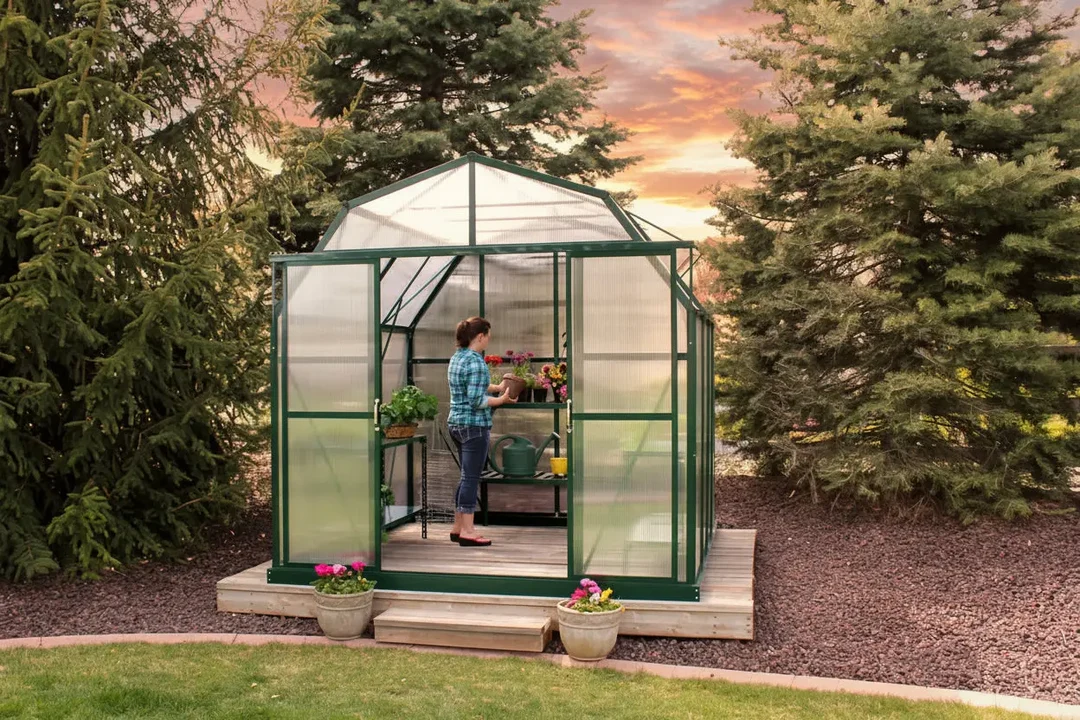

Key Takeaways:
- Start Small, Grow Smart: Begin with forgiving crops and expand as your confidence and skills build.
- Airflow Is Everything: Consistent ventilation prevents overheating, mold, and pest problems before they start.
- Right Structure Matters: A durable, well-ventilated greenhouse sets you up for success from day one.
A greenhouse fails or thrives before you ever plant a seed. Almost all of the time, it comes down to setup, airflow, and the right first crops. Get those three things right, and you're already ahead of most beginners.
At Grandio® Greenhouses, we've spent years building sturdy aluminum-framed greenhouse kits with dependable polycarbonate panels for growers at every level, and we've watched thousands of first-timers turn a bare backyard structure into a thriving growing space. We know exactly where newcomers get stuck, and how to skip those headaches.
In this piece, we'll walk through the top greenhouse gardening tips you should know before you begin, including choosing your ideal setup, managing temperature and watering, picking your first plants, and avoiding rookie mistakes.
Choosing The Right Greenhouse Structure
Your greenhouse is a long-term investment, so pick one that matches your climate, space, and ambitions, not just the cheapest kit on the shelf. First, think about what you actually want to grow and how much of it. After all, a greenhouse always feels smaller once shelving and plants fill it, so it's worth sizing up from your first instinct, or choosing a kit that can expand later.
From there, it’s time to consider panel quality. Thin single-wall panels lose heat fast and often crack in bad weather, while twin-wall polycarbonate insulates better and diffuses light more evenly. This is a key factor alongside structural design, anchoring, ventilation, and load ratings. Wind and snow ratings are worth checking as well, since a structure engineered for harsh weather saves you from repairs, collapse, and lost crops down the road, though survival still depends on correct installation and maintenance. Browsing a collection built specifically for beginners is a solid starting point if you're not sure where to begin.

Essential Setup Steps Before You Start Growing
Below, you’ll find a few beginner gardening tips greenhouse veterans swear by, which are all simple to implement and make a measurable difference in your very first season. Overall, a little prep before planting saves you from problems that are hard to fix once your greenhouse is full.
Pick A Level, Sunny Spot
Place your greenhouse where it gets full morning sun and sits on level ground. Greenhouses need maximum light, particularly in the morning, and good drainage with a solid, flat base keeps the structure stable and prevents standing water around your plants.
Install Shelving, Benches, And Basic Climate Tools
Before your first seedling goes in, install a thermometer, ideally a min/max version, since knowing your daily temperature swings is the foundation for nearly every other growing decision you'll make. In addition, remember that vertical space is your friend. You can always add sturdy benches and shelves to organize seed trays, tools, and pots without crowding your walkways, rather than only filling the space horizontally.
Beginner Gardening Tips: Greenhouse Temperature And Ventilation Basics For New Growers
Heat management is where most beginners struggle. A closed greenhouse on a sunny day can cook your plants in hours, so airflow is non-negotiable. Long story short, proper ventilation removes excess heat, controls relative humidity, promotes air exchange, and prevents temperatures from reaching levels that are harmful to crops.
Figure Out The Ideal Range
Many common greenhouse plants perform well between 65–75°F during the day and 55–65°F at night, though ranges vary by crop, and it's worth watching for spikes on clear afternoons. Even winter sun can push interior temperatures to uncomfortably high levels.
Use Vents, Doors, And Fans Together For Circulation
Roof vents release hot air that naturally rises, while open doors or lower-side vents draw cooler air in from below. So, using both improves cross-ventilation and helps stabilize temperature without electricity, though a small circulation fan may still be needed in hot or still conditions. That fan does double duty by keeping air moving, which promotes more uniform growth and reduces disease by minimizing cool, humid pockets.
Watering And Soil Tips For Greenhouse Success
Greenhouses trap humidity, so watering habits that work outdoors can drown plants inside. Plus, excess moisture also encourages condensation and disease, so consistency matters more than volume.
- Water Deeply And Less Often: Give plants a thorough soak, then let the top inch of soil dry before watering again. This is because frequent shallow watering leads to weak roots and fungal issues.
- Use Quality, Well-Draining Soil: Skip heavy garden dirt in favor of a light potting mix with compost, which holds moisture without going soggy and gives roots the oxygen they need to thrive.
- Watch Humidity Levels: High humidity invites disease, so watering in the morning gives foliage time to dry by evening. Pairing that habit with good ventilation reduces how long leaves stay wet, which is one of the simplest ways to lower disease risk without extra equipment.

Best Plants To Grow First In A Greenhouse
Start with forgiving crops that reward you quickly. Early wins build the confidence to tackle trickier plants later.
- Fast, Reliable Greens: Lettuce, spinach, and radishes germinate fast and tolerate mistakes, making them ideal for learning your greenhouse's rhythm without too much risk.
- Herbs That Keep Giving: Basil, parsley, and cilantro love greenhouse warmth and reward you with a continuous harvest while asking for very little upkeep.
- Warm-Season Favorites: Once you're comfortable, move up to tomatoes, peppers, and cucumbers, which reward greenhouse growers with longer seasons and bigger yields than an outdoor plot typically allows.
Greenhouse Growing Tips: Common Beginner Mistakes To Avoid
Most first-year problems trace back to a handful of avoidable habits. Overwatering is the most common killer, as soggy soil suffocates roots. When in doubt, wait a day and check the soil before reaching for the hose.
Ignoring ventilation is a close second. Basically, a sealed-up greenhouse leads to overheating, condensation, and disease, so checking vents daily, especially on sunny days, should become automatic. Overcrowding plants round out the list. Cramming too many into a limited space blocks airflow and light, so giving each plant room to breathe pays off in lower disease risk and better yields.
How Grandio® Simplifies Success For New Gardeners
A greenhouse built with beginners in mind removes obstacles rather than creating new ones. Every Grandio® kit ships with premium twin-wall polycarbonate panels for strong insulation and light diffusion, plus adjustable roof vents that make climate control simple from day one. From there, frames are engineered for high winds up to 76 mph and more than a foot of snow, so the structure itself isn't something you need to worry about when the weather turns.
Plus, clear manuals and step-by-step video guides make assembly manageable without support calls, and because many of our greenhouses expand in 4-foot increments, yours can grow right along with your ambitions. Whether you're putting this advice into practice for the first time or scaling up an existing setup, our DIY-friendly kits are suitable for gardeners of all skill levels.

Final Thoughts
Greenhouse gardening rewards patience and a few solid habits: manage your airflow, water with restraint, and start with plants that forgive mistakes. Nail those basics, and you'll be harvesting earlier in spring and later into fall than your outdoor-only neighbors. The right greenhouse makes all of it easier, because ultimately, everything else follows from getting that starting foundation right.
Frequently Asked Questions About Greenhouse Gardening Tips
What are the steps to start greenhouse gardening as a beginner?
Choose a quality greenhouse, set it on level ground with full sun, add shelving and a thermometer, prep well-draining soil, then start with easy crops like lettuce or herbs while managing ventilation daily.
Do plants grow better in a greenhouse or outside?
Plants often grow better in a greenhouse because it moderates stress from frost and wind while extending the season, giving you more control over temperature, humidity, and light. Pest exclusion isn't automatic, though. Greenhouses can still harbor aphids, whiteflies, and mites without proper sanitation and monitoring.
Should you open your greenhouse every day?
Yes. Checking and opening your greenhouse daily for ventilation is worthwhile, especially on sunny days. Fresh airflow prevents overheating, controls humidity, and reduces disease risk, even in cooler months when interior temperatures can still spike.
Why are my greenhouse plants dying?
Plants being in poor condition are usually due to overwatering, poor ventilation, or extreme temperatures. Check that the soil drains well, the vents open daily, and temperatures stay within range. Overcrowding and pests are other common culprits worth ruling out.
What are common greenhouse pests, and how can I control them naturally?
Aphids, whiteflies, and spider mites are common culprits. Beneficial insects like ladybugs, neem oil sprays, sticky traps, and good airflow can help, but effective control combines monitoring, sanitation, correct identification, and label-compliant treatment. Also, neem oil should always be applied according to the product label, since it can affect beneficial insects.
How do I maintain my greenhouse throughout the seasons?
Clean panels for light, check vents and seals, adjust watering and heating as weather shifts, and sanitize between crops. Seasonal upkeep keeps your structure efficient and your plants healthy year-round.