
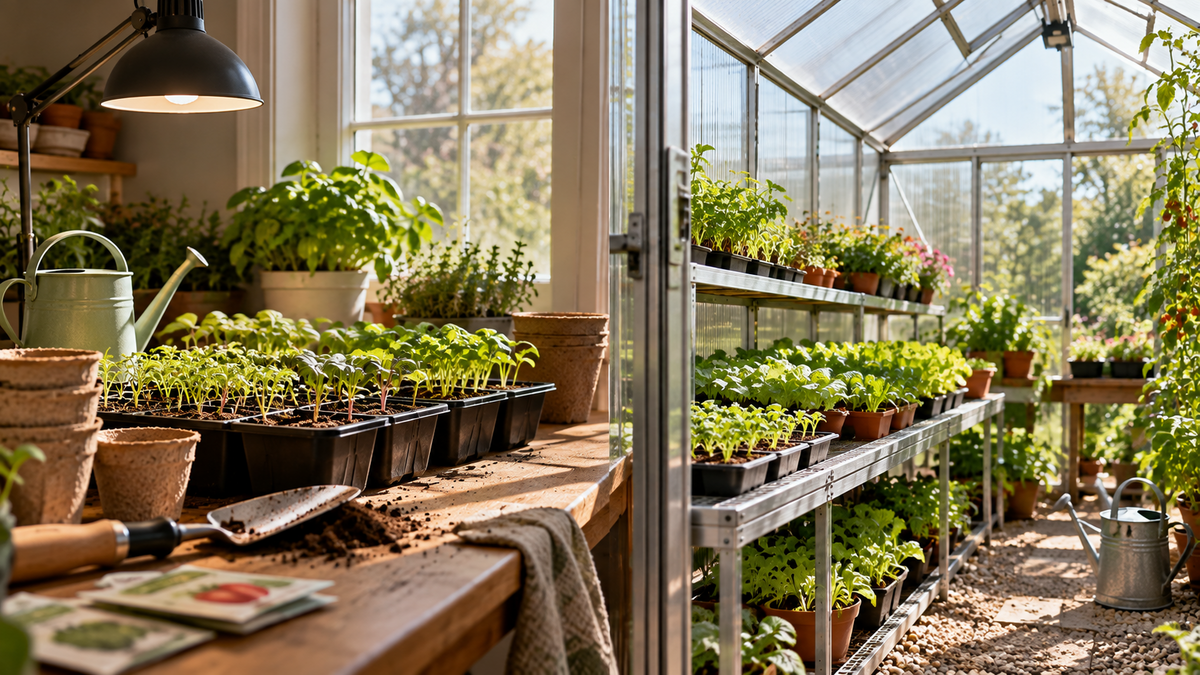

Key Takeaways:
- Growing Environment: Seed starting indoors provides greater control over early growing conditions, while greenhouse growing offers natural light and dedicated plant space.
- Space Planning: The number of seedlings you plan to grow can help determine whether an indoor setup or greenhouse is more practical.
- Flexible Approach: Indoor and greenhouse seed starting can be used separately or together to support seedlings at different stages of development.
Starting seeds early can give plants more time to develop before the main outdoor growing season begins. Seed starting indoors offers a controlled place for germination, while starting seeds in a greenhouse provides more growing space and access to natural sunlight. Each method has practical advantages depending on your climate, available space, and planting plans.
At Grandio Greenhouses, we have helped thousands of families build greenhouses since 2006. We design durable greenhouse kits for home gardeners and serious growers, with features that support protected growing through changing seasons. Our experience gives us a practical understanding of how the right growing environment can help gardeners make better use of their season.
In this piece, we will discuss seed starting indoors versus starting seeds in a greenhouse, including how the two methods compare in terms of light, temperature, space, and getting seedlings ready for the garden.

Seed Starting Indoors: Getting an Early Start
Seed starting indoors gives you more control over the conditions surrounding young plants. Seeds can germinate in a warm, protected area even when outdoor temperatures are still too cold for planting. With seed trays, a suitable growing medium, and sufficient light, you can get vegetables, herbs, and flowers underway weeks before they could be planted outside.
The main limitation is space. As seedlings grow, trays can quickly take over windowsills, tables, or shelving. Gardeners planning a larger crop may eventually need more dedicated growing room. Our guide on What to Grow in a Greenhouse for Beginners can help you plan which crops may benefit from protected growing space.
Indoor Seed Starting: Light, Temperature, and Space
Indoor seed starting typically makes temperature easier to regulate, but providing enough light can take additional planning. A bright window may work for some seedlings, while grow lights can provide more consistent light as plants develop.
Space should also factor into your decision. A few trays are relatively easy to accommodate indoors, but larger planting plans require more room. If you regularly start many plants, moving the operation into a dedicated greenhouse can free up living space while keeping seedlings protected.
Starting Seeds in a Greenhouse: What Changes?
Starting seeds in a greenhouse gives you a dedicated area for propagation and access to abundant natural light. A greenhouse also provides more room for trays, pots, and young plants than most indoor spaces.
Unlike a temperature-controlled room, however, greenhouse temperatures respond to outdoor conditions. Ventilation and temperature monitoring remain important, particularly during cold nights or sunny days. Gardeners considering a manageable backyard setup can explore our 6x8 greenhouse options for an idea of how a compact growing area can be organized.
Comparing Indoor Seed Starting With a Greenhouse
Both methods can extend your growing season, but they offer different advantages. Starting indoors provides a stable environment for germination and works well for smaller quantities of seedlings. A greenhouse provides additional growing space and natural sunlight, making it practical for gardeners who want to start more plants or continue growing under cover.
For gardeners who need additional floor space for trays and plants, an 8x8 greenhouse can provide more room for organizing a seed-starting setup.

Starting Seeds in a Greenhouse Before Transplanting
A greenhouse can also help bridge the transition between protected seed starting and outdoor planting. Seedlings can remain sheltered while gradually adjusting to changing temperatures before they are moved into garden beds.
For gardeners interested in creating a dedicated space for this process, the Element Series offers greenhouse options designed for home growing. Grandio greenhouses are designed with DIY assembly in mind and provide the protected space many home gardeners want for extending their growing season.
Seed Starting Indoors or in a Greenhouse: Which Fits Your Garden?
Seed starting indoors may make more sense if you have a smaller number of plants and want close control over early germination. A greenhouse can be useful if you need more growing space, want to rely more on natural sunlight, or plan to start larger quantities of seedlings.
Some gardeners also use both methods, germinating seeds indoors before moving young plants into a greenhouse as conditions improve. For more ideas on planning and using your growing space throughout the year, browse our Greenhouse & Garden Articles.

Final Thoughts
Both approaches can give seedlings a strong start, but the right choice depends on your growing space, climate, and planting plans. Seed starting indoors offers greater control during germination, while a greenhouse provides more room and natural sunlight as seedlings develop. Using either method, or combining the two, can help you start earlier and prepare healthy plants for the growing season ahead.
Frequently Asked Questions About Seed Starting Indoors vs. in a Greenhouse
What seeds should not be started indoors?
Root crops such as carrots, radishes, and parsnips are generally better sown directly where they will grow because transplanting can disturb their developing roots. Some fast-growing crops may also gain little from an early indoor start.
How early should you start seeds before the last frost?
Timing varies by plant. Many vegetables and flowers are started several weeks before the expected last frost date, so checking the seed packet for crop-specific instructions is important.
Do seeds need darkness or light to germinate?
It depends on the species. Many seeds germinate beneath a thin layer of growing medium, while others require exposure to light. Follow the planting depth and light instructions provided for each seed variety.
What type of container is best for seed starting indoors?
Seed trays, cell packs, small pots, and reusable propagation containers can all work well. Containers should provide adequate drainage and enough room for roots to develop before transplanting.
Should you cover seed trays during germination?
A clear cover or humidity dome can help retain moisture while seeds germinate. Once seedlings emerge, removing the cover can improve airflow and reduce excess humidity around young plants.
How often should seedlings be watered?
The growing medium should remain consistently moist without becoming waterlogged. Watering frequency varies based on container size, temperature, airflow, and how quickly the growing medium dries.
Why do indoor seedlings become tall and thin?
Tall, weak seedlings are often associated with insufficient light. Increasing light exposure or adjusting the position of grow lights can encourage more compact, sturdy growth.
Can you use regular garden soil for starting seeds?
Garden soil is usually too dense for small containers and may drain poorly. A seed-starting mix generally provides a lighter texture that supports germination and early root development.
When should seedlings be moved into larger containers?
Seedlings may need larger containers once they outgrow their cells, become crowded, or develop roots that fill the available space. Potting them up provides additional room for continued growth.
How can you tell if seedlings are ready for transplanting?
Look for established seedlings with several true leaves and healthy root development. Outdoor conditions should also be appropriate for the specific crop before permanent transplanting.

