

Key Takeaways:
- Space Efficiency: Vertical gardening makes use of walls, overhead areas, and multiple growing levels to expand usable greenhouse space.
- Plant Planning: Crop size, light requirements, airflow, accessibility, and mature growth habits should guide the layout of a vertical garden greenhouse.
- Practical Maintenance: Stable supports, appropriate watering, sufficient drainage, and regular plant inspections help keep a vertical growing system manageable.
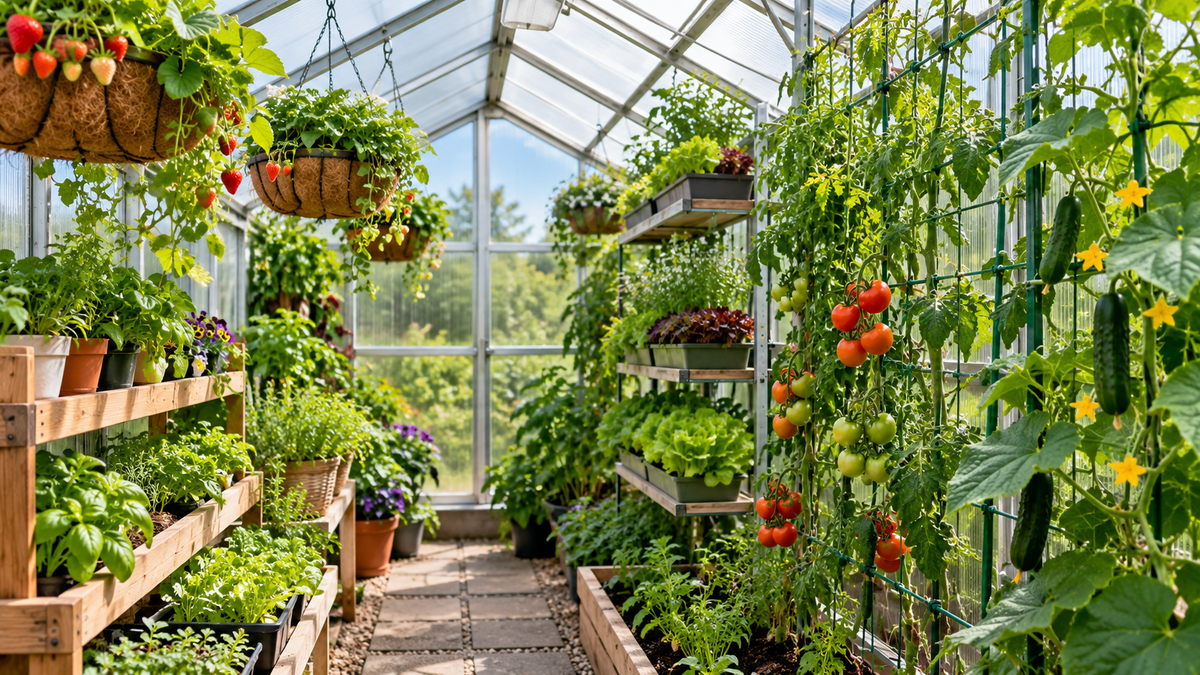
Vertical gardening ideas can help small greenhouse growers use limited space more efficiently. Instead of relying only on the floor, plants can be arranged on shelves, trellises, hanging containers, and other vertical supports. This creates more growing room while keeping pathways open and plants easier to access.
At Grandio Greenhouses, we build durable greenhouse kits for home and hobby growers who want quality without the cost of a custom greenhouse. Our lineup includes compact 6-foot-wide models as well as larger greenhouse options, with features designed for practical DIY growing. Our aluminum frames are backed by a limited lifetime warranty, while our plastic panels carry a 10-year limited warranty.
In this piece, we will be discussing vertical gardening ideas for small greenhouses, including ways to use walls, hanging containers, shelving, trellises, and thoughtful plant placement.

Make the Most of Greenhouse Wall Space
Walls offer valuable growing space without taking away from the main floor area. Wall-mounted planters, narrow shelving, and vertical supports can hold herbs, leafy greens, strawberries, and other compact crops. Keep containers positioned where plants can receive adequate light without shading crops below.
This approach is especially useful in Small Greenhouses, where organizing plants upward can leave more room for walking, watering, and routine plant care.
Try Hanging Vertical Gardening Ideas
Hanging baskets and suspended containers are practical vertical gardening ideas for crops with compact or trailing growth habits. Strawberries, herbs, and some compact tomato varieties can grow well overhead when containers are securely supported.
Place hanging plants where they will not interfere with doors, vents, or pathways. In a greenhouse from the Element Series, growers can plan hanging areas alongside their floor-level containers to use the available growing area more efficiently.
Add Shelves and Tiered Staging for More Growing Room
Shelving makes it easier to arrange plants at several heights while keeping pots organized and accessible. Lower levels can accommodate plants that tolerate less direct light, while upper shelves can hold seedlings, herbs, and other sun-loving plants.
Dedicated Staging & Work Surfaces can also provide space for container plants while creating a practical area for potting, transplanting, and everyday greenhouse tasks.
Use Trellises for a Vertical Garden Greenhouse
A vertical garden greenhouse can use trellises, strings, stakes, or mesh supports to guide climbing plants upward. Tomatoes, cucumbers, peas, and pole beans are natural candidates because their growth can be trained instead of allowed to spread across valuable floor space.
A 6x8 Greenhouse can benefit from placing climbing crops along a wall or designated growing bed, helping maintain a usable central pathway.

Choose Crops for Small Space Vertical Gardening
Successful small space vertical gardening starts with choosing plants suited to upward growth or compact containers. Climbing vegetables can occupy trellises, while herbs, lettuce, and strawberries can fill shelves and hanging planters.
Plant compatibility matters too. Some crops grow more successfully together because of their different growth habits and needs. Our Companion Planting Guide For Greenhouse Growers offers additional guidance for planning plant combinations inside a greenhouse.
Keep Vertical Plants Accessible and Healthy
Vertical growing should make greenhouse space more functional, not harder to maintain. Leave enough room between plants and growing structures to reach containers comfortably for watering, pruning, harvesting, and checking for signs of pests or disease. Avoid packing shelves too tightly, as crowded plants can limit airflow and prevent light from reaching lower levels. Keeping pathways clear also makes it easier to move around the greenhouse and complete everyday gardening tasks.
Check trellises, hooks, shelves, and other supports regularly as plants mature and gain weight. Climbing crops may need additional ties or guidance to keep their growth controlled and supported. Place frequently harvested crops within comfortable reach, while plants that need less attention can occupy higher or less accessible areas. A thoughtful vertical arrangement can help gardeners use limited greenhouse space efficiently while keeping plant care organized and manageable throughout the growing season.

Final Thoughts
Vertical gardening gives small greenhouse growers more ways to use available space while keeping plants organized and accessible. Shelves, hanging containers, and trellises can accommodate different crops without overcrowding the floor. By considering plant size, light, airflow, and accessibility, gardeners can create a practical growing arrangement that supports healthy plants and makes everyday greenhouse care easier.
Frequently Asked Questions About Verticla Gardening Ideas for Small Greenhouses
Can vertical gardening increase greenhouse growing capacity?
Yes. Vertical gardening can increase usable growing capacity by adding multiple planting levels within the same footprint. The amount of additional space depends on the greenhouse dimensions, plant choices, and vertical system used.
What materials work well for vertical greenhouse planters?
Common options include plastic pots, fabric grow bags, planter pockets, and lightweight containers. Materials should tolerate regular exposure to moisture and greenhouse temperatures while providing sufficient drainage.
How do you water plants in a vertical greenhouse setup?
Plants can be watered by hand or with a drip irrigation system. Drip lines can be particularly useful for multi-level arrangements because they deliver water directly to individual containers and reduce the need to reach higher plants frequently.
Do vertical greenhouse plants need more frequent watering?
Some may. Hanging pots and smaller containers can dry out faster than larger ground-level beds. Check the growing medium regularly rather than assuming every level requires the same watering schedule.
Can hydroponics be used for vertical gardening in a small greenhouse?
Yes. Certain hydroponic towers and stacked systems are designed for vertical growing. Before installing one, consider its water supply, power requirements, overall height, and the mature size of the crops.
How much weight can greenhouse vertical systems support?
Weight capacity depends on the greenhouse structure and the support system being used. Wet soil, mature plants, containers, and water can become heavy, so growers should follow the manufacturer's specifications before attaching equipment to a greenhouse frame.
Should vertical planters be rotated inside a greenhouse?
Rotating containers can help plants receive more balanced light, particularly if one side consistently faces the strongest sunlight. Rotation needs vary based on greenhouse orientation, season, and crop type.
How can pests be managed in a vertical garden greenhouse?
Inspect leaves, stems, containers, and the undersides of shelving regularly. Removing affected plant material promptly and keeping growing areas clean can help prevent pest problems from spreading between closely positioned plants.
Can vertical gardening be used year-round in a greenhouse?
It can be used throughout the year, but successful growing depends on local climate, greenhouse conditions, crop requirements, and available temperature control. Seasonal changes in daylight can also affect which plants perform well.
How much space should be left between vertical planters?
There is no single spacing measurement suitable for every setup. Allow enough room for mature plant growth, airflow, light penetration, watering, pruning, and harvesting rather than spacing containers according to their size at planting time.

