

Key Takeaways:
- Growing Space: Containers and raised beds provide different ways to organize greenhouse crops while making productive use of the available interior space.
- Planting Flexibility: Container gardening ideas can help gardeners accommodate crops with different root, soil, and positioning requirements.
- Layout Planning: Considering pathways, accessibility, drainage, work areas, and plant size can make a greenhouse easier to maintain throughout the growing season.
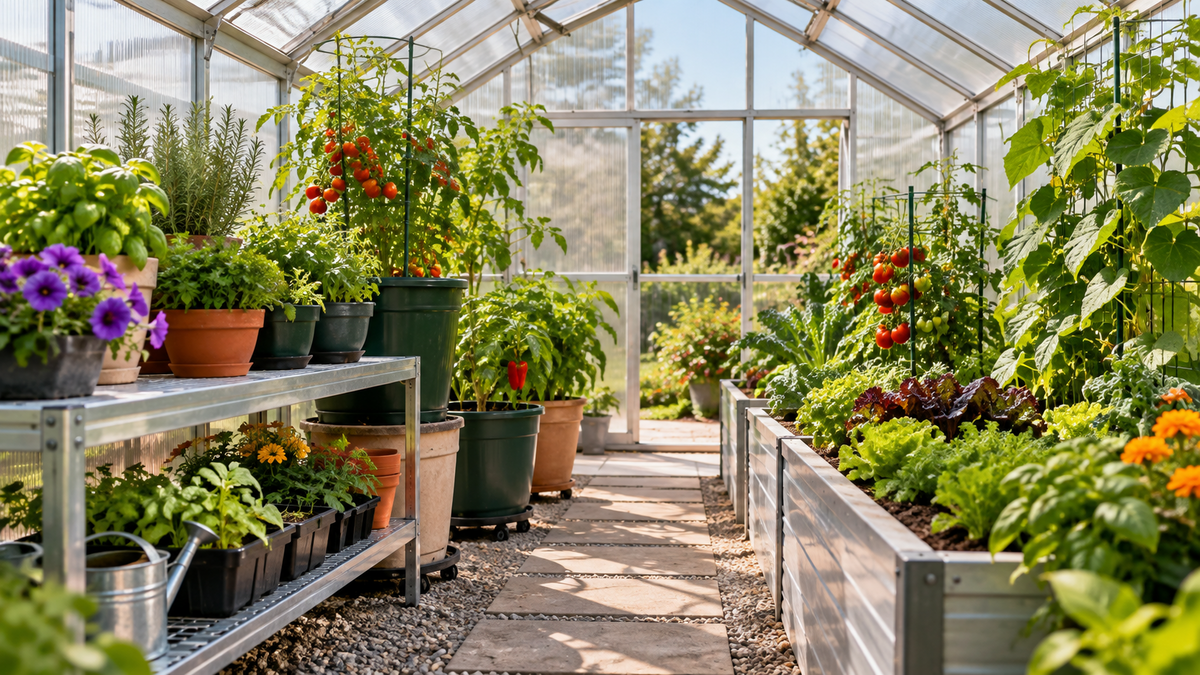
Container and raised bed gardening can help you make practical use of the growing space inside a greenhouse. Containers give you flexibility to move individual plants, while raised beds provide dedicated areas for larger crops and deeper root systems. Using both methods can create an organized growing area that supports vegetables, herbs, flowers, and other plants throughout the season.
At Grandio Greenhouses, we have helped thousands of families build greenhouses since 2006. We design durable greenhouse kits for home gardeners and serious growers, with features such as strong aluminum construction, polycarbonate panels, ventilation, generous growing space, and expandable designs available across our greenhouse series. Our goal is to give gardeners a dependable space where they can grow more and extend their growing season.
In this piece, we will discuss container gardening ideas, raised bed gardening inside a greenhouse, container vegetable gardening, and practical ways to organize your greenhouse growing space.

Container Gardening Ideas for Greenhouse Growing
Container gardening makes it easier to organize a greenhouse around the plants you want to grow. Pots, planters, and grow bags can be moved as light conditions and seasonal needs change, giving you flexibility that permanent planting areas cannot always provide.
Start by matching container size to the mature root system of each plant. Tomatoes and peppers generally need more soil volume than herbs or leafy greens. Containers also need drainage holes so excess moisture can escape. If you are still deciding how much growing room you need, our Greenhouse Size Guide can help you compare available space before planning the interior.
Raised Bed Gardening Greenhouse Setup and Planning
A raised bed gardening greenhouse setup provides defined growing areas while giving roots more room to spread than most containers. Raised beds work particularly well along greenhouse walls, where they can leave the center open for a comfortable walkway.
Before building beds, consider their width, depth, and accessibility. You should be able to reach plants without stepping into the growing soil. Our Backyard Greenhouses offer several options for creating a protected garden space suited to different yards and growing plans.
Choosing Crops for Container Vegetable Gardening
Container vegetable gardening works well for crops such as tomatoes, peppers, lettuce, radishes, and many herbs. Plant selection should account for available sunlight, mature plant size, root depth, and spacing.
Vertical growth can also help conserve floor space. Trellised cucumbers, peas, and indeterminate tomatoes can grow upward while shorter crops occupy nearby containers. Gardeners working with a narrower footprint can explore a 6x12 Greenhouse when planning how to balance growing areas and walking space.
Combining Raised Bed Gardening Greenhouse Spaces With Containers
Containers and raised beds do not have to be separate approaches. Combining them can make the greenhouse more adaptable. Permanent beds can accommodate crops that benefit from deeper growing space, while containers can hold herbs, seedlings, or plants that may need to be repositioned.
The greenhouse structure also matters when organizing the interior. Our Element Series provides a practical starting point for gardeners creating a dedicated backyard growing environment.

Container Vegetable Gardening for Better Use of Greenhouse Space
Good organization can make container vegetable gardening easier to manage. Keep taller plants where they will not unnecessarily shade smaller crops, and leave enough room between containers for watering, pruning, harvesting, and airflow.
Adding Staging & Work Surfaces can provide dedicated areas for seedlings, smaller pots, transplanting, and everyday gardening tasks. Keeping frequently used plants and supplies within easy reach can also make routine greenhouse care more convenient.
Planning Your Raised Bed Gardening Greenhouse Layout
Before placing beds and containers, map out pathways, growing areas, doors, vents, and work surfaces. Think about how you will move through the greenhouse while carrying soil, tools, plants, and watering equipment. A well-planned layout can also leave room for your growing methods to change over time.
Gardeners interested in exploring alternatives to soil-based containers and beds can also read our guide to Hydroponic Greenhouse Basics. Comparing different growing systems can help you plan a greenhouse interior that supports the crops and gardening methods you prefer.

Final Thoughts
Containers and raised beds can make greenhouse gardening more organized, flexible, and practical for a wide range of crops. By considering plant size, drainage, accessibility, pathways, and available growing space, you can create a setup that supports easier day-to-day care. A thoughtful layout also gives you room to adjust your greenhouse as your garden and growing goals develop over time.
Frequently Asked Questions About Container and Raised Bed Gardening Inside a Greenhouse
Can greenhouse containers be reused between growing seasons?
Yes. Durable containers can be reused for multiple growing seasons. Before replanting, remove old plant material and growing medium as needed, then clean the containers to reduce the chance of carrying pests or plant diseases into the next crop.
What materials work well for greenhouse containers?
Plastic, fabric, ceramic, and other purpose-built planting containers can work in a greenhouse. Each material handles moisture and temperature differently, so consider container weight, drainage, durability, and how often plants will need watering.
Can containers be placed directly on a greenhouse floor?
They can, but the type of greenhouse floor matters. Containers should remain stable and allow water to drain freely. Raising certain pots slightly can improve drainage and make the area beneath them easier to clean.
How can container gardening ideas help with crop rotation?
Containers allow gardeners to change crop locations without rebuilding permanent beds. Rotating plant families between containers or replacing growing media can also help gardeners manage soil conditions from one planting cycle to the next.
How often should greenhouse container plants be fertilized?
Fertilizing frequency depends on the crop, growing medium, fertilizer, and container size. Because nutrients can leave containers during watering, monitor plant growth and follow the fertilizer manufacturer’s application directions rather than relying on a fixed schedule.
Do raised beds inside a greenhouse need liners?
Not always. A liner may be useful depending on the bed material, greenhouse floor, and desired separation between the growing medium and surrounding surfaces. Choose materials intended for gardening if a liner is used.
Can perennial plants stay in greenhouse containers year-round?
Some perennial plants can remain in containers for extended periods, provided the container offers enough root space and the greenhouse conditions suit the species. Periodic repotting or root maintenance may be necessary as plants mature.
How can gardeners prevent algae around greenhouse containers?
Avoid allowing water to remain on greenhouse surfaces for long periods. Appropriate drainage, careful watering, regular cleaning, and adequate air circulation can help limit the consistently damp conditions that encourage algae growth.
Should saucers be used under greenhouse containers?
Saucers can collect drainage water and help protect certain surfaces, but standing water should not remain around plant roots. Empty saucers when necessary and consider how excess irrigation water will be managed throughout the greenhouse.
Can raised beds and containers use the same soil mix?
They can sometimes share similar ingredients, but their needs are not necessarily identical. Containers generally benefit from a lighter growing medium that drains well, while raised-bed mixes can be selected according to bed depth, crops, and existing soil conditions.

