

Key Takeaways:
- No Soil Needed: A hydroponic greenhouse feeds plant roots directly with a water-and-nutrient solution for faster, cleaner growth.
- Control Is Everything: Success hinges on daily attention to water quality, nutrient levels, and pH balance.
- Right Fit Matters: Soilless growing rewards hands-on gardeners who enjoy meticulously planning out a system rather than set-and-forget planting.
Can you really grow a full harvest without a single scoop of dirt? The answer is yes. A hydroponic greenhouse does exactly that, feeding your plants a precise water-and-nutrient mix inside a weather-protected structure.
At Grandio® Greenhouses, we've spent years building greenhouses tough enough for 76 mph winds and heavy snow, giving you the kind of controlled, durable environment where hydroponic systems truly shine.
This piece covers how hydroponic greenhouses work, their advantages, typical startup costs, daily upkeep, and how to decide whether they fit your budget and goals.
What Is A Hydroponic Greenhouse And How Does It Work?
Essentially, a hydroponic greenhouse combines two ideas: growing plants without soil and doing it inside a controlled structure. Instead of drawing nutrients from dirt, roots sit in or are fed by a nutrient solution mixed at specific ratios depending on the crop and growth stage, then delivered straight to the roots.
The greenhouse shell itself matters more than it might seem, because it gives you temperature, humidity, and light control that open-air hydroponics can't match. For instance, a well-insulated structure, like one built with 10mm twin-wall polycarbonate, holds heat and diffuses light, keeping your solution and plants stable through swinging weather. From there, the growing cycle is fairly straightforward. Water and nutrients circulate to the roots, excess drains back to a reservoir, and the cycle repeats.

Advantages Of Soilless Growing Over Traditional Soil Gardening
This approach isn't just a novelty; it solves legitimate problems that soil-based growers face every season. With nutrients transported directly to the roots, plants skip the work of foraging through soil, and that energy goes into growth instead. That said, many crops mature more quickly and produce more on the same footprint, though results still depend on the crop, system, and conditions.
Water Efficiency
Water efficiency is another major advantage. Because water recirculates through the system, closed systems can use roughly 80% to 99% less water than traditional gardening, which is a meaningful win for anyone focused on sustainability or gardening in dry climates.
Fewer Pests And No Weeds
No soil also means zero weeding and fewer sources of soil-borne disease, though hydroponics doesn't eliminate disease risk; root diseases such as Pythium can still spread rapidly through shared nutrient solutions. Additionally, a closed greenhouse further reduces pest pressure, cutting down on the need for chemical intervention.
Space And Location Freedom
Finally, there's flexibility in space and location. You can grow vertically and in tight spaces, and poor native soil is no longer a limiting factor. So, if your backyard dirt is rocky or contaminated, hydroponics sidesteps that problem entirely.
Popular Hydroponic Gardening Systems For Controlled Environments
There's no single "hydroponic system.” Several designs exist, each with unique perks and tradeoffs.
- Deep Water Culture (DWC): This is the simplest, making it a favorite among beginners. It involves letting roots hang directly in oxygenated nutrient water, making it inexpensive and ideal for leafy greens.
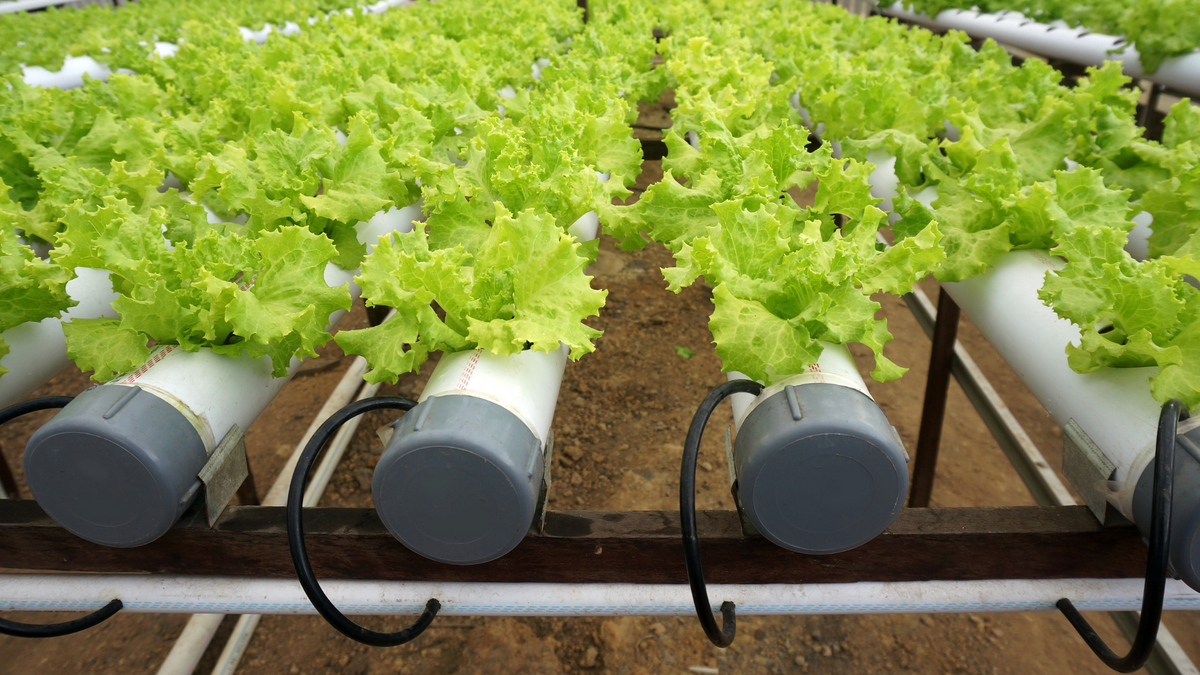
- Nutrient Film Technique (NFT): This technique runs a thin, continuous stream of nutrient solution over the roots in sloped channels. It’s efficient and space-smart, but dependent on steady pump operation.
- Ebb And Flow: These systems flood the grow bed with solution on a timer, then drain it back to a reservoir, making them versatile enough for a wide range of crops.
- Drip Systems: This style delivers a solution to each plant's base through emitters, scaling nicely for larger fruiting plants like tomatoes and peppers.
- Aeroponics: Here, roots hang in the air and get misted with nutrient solution. It offers excellent oxygenation and fast growth but demands precise, reliable equipment.
Key Upfront Costs And Equipment Needed For A Soilless Growing Greenhouse
Startup costs vary widely based on scale and system type, but the core components stay relatively the same. Namely, you’ll want a reservoir, a pump, growing channels or containers, an air stone or aerator, and grow media like clay pebbles or rockwool. Budget for liquid or powdered nutrients too, plus a pH meter and an EC/TDS meter, since these testing tools are non-negotiable for reliable results.
Depending on your climate, you'll also need to account for supplemental grow lights, heating or cooling, and a dependable power source. After all, a well-insulated greenhouse lowers these costs by maintaining a more stable temperature on its own. Small DIY systems may cost under $500, while greenhouse-scale systems with climate control, lighting, and automation can run into the thousands. Starting small and learning the system before expanding tends to be the more forgiving approach.

Daily Maintenance: Managing Water Quality, Nutrients, And pH
Hydroponics trades yard work for monitoring. The system generally isn’t as forgiving as soil, so a short everyday routine keeps everything running smoothly. To start, test pH daily and keep it roughly between 5.5 and 6.5 for most crops. Outside that range, roots can't absorb nutrients properly even when they're present. Afterward, use an EC or TDS meter to track nutrient concentration, topping off or adjusting as plants drink and feed, since levels shift as your crop grows.
Water quality matters just as much as nutrient balance. Keep the solution well-oxygenated and the root zone in the high 60s to low 70s, as excessive warmth and low oxygen increase the risk of root disease. Additionally, clean the reservoir regularly and replace the solution on a schedule, since proper ventilation helps regulate both air temperature and humidity around your soilless setup. Beyond that, inspect roots and leaves regularly. Discoloration, slime, or wilting usually signal a pH swing, nutrient imbalance, or pump issue that you can catch early.
Deciding If A Hydroponic Greenhouse Fits Your Budget And Goals
Hydroponics isn't for everyone, and that's fine. However, it's a strong fit if you want faster growth, higher yields, year-round production, and precise control. So, if you enjoy tinkering and monitoring, you'll likely enjoy the process itself, not just the results. On the other hand, if you want low-maintenance, set-it-and-forget-it gardening, or aren't ready for the upfront investment and routine checks, standard soil may suit you better.
There's also a middle path worth considering. Many growers run soil beds for some crops and a hydroponic system for others, all inside one greenhouse. A structure that expands in 4-foot increments makes it easier to add a hydroponic zone later, once you've decided it's worth the investment.

Final Thoughts
A hydroponic greenhouse rewards curious, hands-on growers with faster harvests, better water efficiency, and full control over what their plants eat. It asks for more attention than soil, but for many gardeners, that tradeoff is the appeal. Whether you go fully soilless or blend methods, a stable, well-built structure is the foundation. Get the environment right, and the rest tends to follow.
Frequently Asked Questions About Hydroponic Greenhouses
Is it better to grow in soil or hydroponics?
Neither is universally better. It really depends on your goals. Hydroponics offers faster growth and water savings but needs daily monitoring, while soil is more forgiving and better suited to hands-off gardeners.
Which is better, aeroponics or hydroponics?
Aeroponics grows plants faster with superior root oxygenation, but it's more complex and equipment-dependent. Hydroponics is more forgiving and the more practical starting point for most home growers.
Which crop is best for hydroponic farming?
Leafy greens like lettuce, spinach, kale, and basil are excellent for hydroponics. They grow fast and thrive in soilless systems. Tomatoes, cucumbers, peppers, and strawberries also do very well.
Which hydroponic system is best for beginners?
DWC is generally best for beginners because it’s simple, inexpensive, and low-maintenance, with roots suspended directly in oxygenated nutrient water.
What are the biggest challenges of running a hydroponic greenhouse?
Higher upfront costs, daily monitoring of pH and nutrients, and reliance on power and pumps are the main hurdles. A system failure can quickly harm plants, so consistency and backups matter.
What are the different types of hydroponic systems for greenhouses?
The main types are Deep Water Culture, Nutrient Film Technique, Ebb and Flow, Drip Systems, and Aeroponics, each varying in cost, complexity, and best-fit crops.