
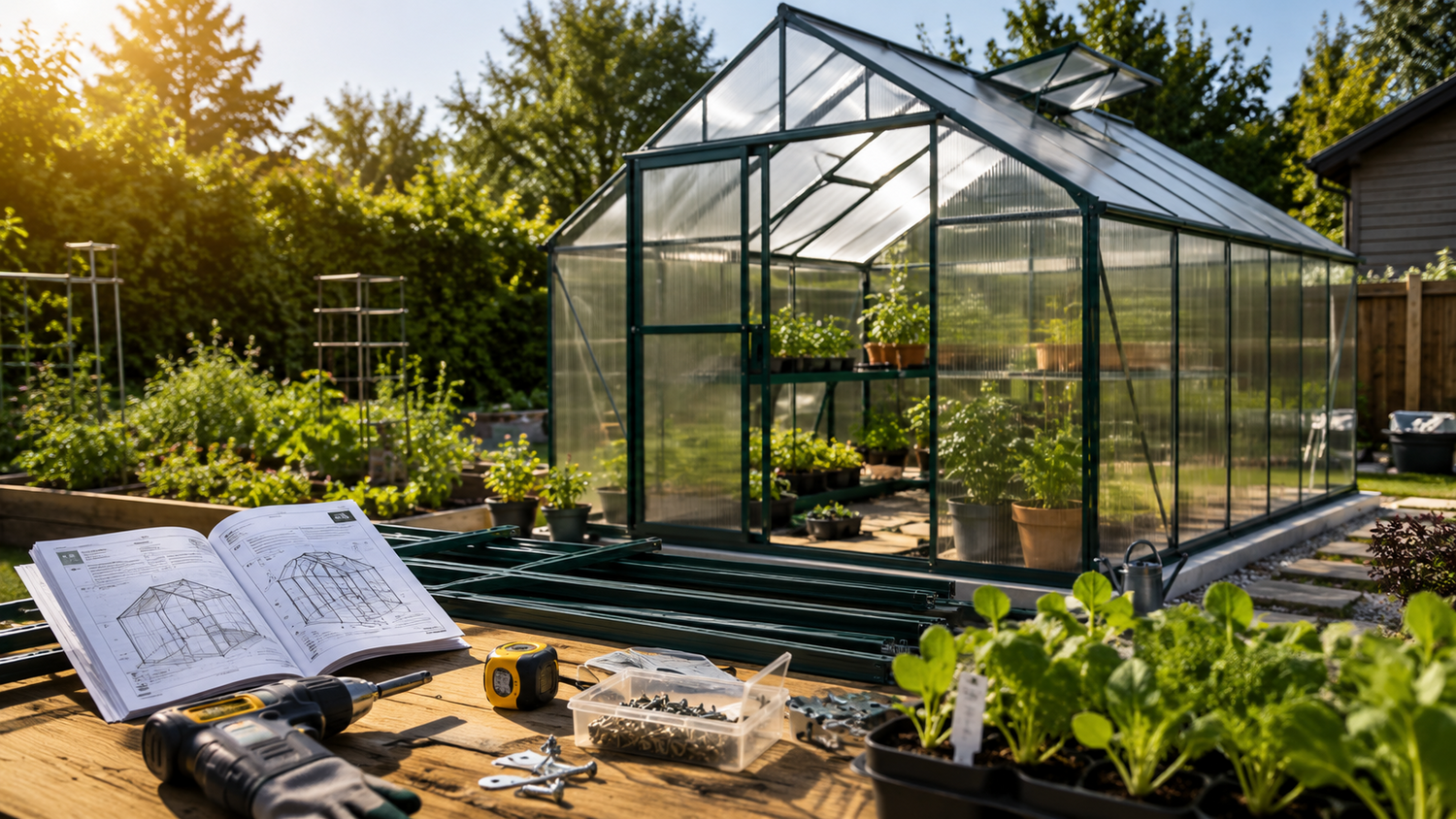

Key Takeaways:
- What It Means: A DIY greenhouse is any greenhouse you assemble yourself, whether from raw materials or a pre-engineered kit.
- Two Paths: Building from scratch offers total design freedom, while a kit trades some customization for speed and consistency.
- Planning Ahead: Foundation, future expansion, and long-term growing goals all shape which option makes the most sense.
A DIY greenhouse gives you a dedicated space to grow plants while protecting them from wind, frost, and unpredictable weather. It's labeled "do-it-yourself" for a simple reason: you're the one putting it together. That covers a wider range of projects than most people expect, from a fully custom structure built board by board to a kit that arrives with every part pre-cut and labeled.
At Grandio® Greenhouses, we design premium greenhouse kits that combine durable materials with practical features to help gardeners create productive growing spaces that last for years.
This guide breaks down what a DIY greenhouse involves, where building from scratch and building from a kit diverge, and what to think through before you commit to either path.
What Makes A Greenhouse "DIY"?
The defining feature of a DIY greenhouse isn't the materials or the size. It's who does the assembly. Professionally installed greenhouses do exist, where a contractor handles everything from the foundation to the final panel. However, most home and hobby greenhouses are DIY by default, because the person growing in it is also the one who puts it up.
Within that category, there's a real range of effort involved. Some gardeners design and source every piece themselves, cutting frame stock to length, sourcing glazing panels separately, and figuring out hardware compatibility as they go. Others start from a kit, where the manufacturer has already solved those design and compatibility questions, and assembly means following an included manual rather than drafting a plan from scratch.

Who A DIY Greenhouse Is Right For
Both paths appeal to a similar type of person: someone who wants hands-on control over their growing environment rather than an off-the-shelf solution they can't adjust or repair themselves. Beyond that overlap, the two paths tend to attract different priorities.
To start, gardeners drawn to a fully custom build usually value design flexibility above all else. They might prioritize matching an unusual footprint, reusing salvaged materials, or building something no manufacturer offers in a standard size. Meanwhile, individuals drawn to greenhouse kits tend to prioritize getting a reliable structure up quickly, without the research burden of sourcing and rating every individual component themselves. Neither motivation is more legitimate than the other; they just lead to specific amounts of planning time before the first piece goes into the ground.
Build Your Own Greenhouse: Full Creative Control
Starting from raw materials means you're taking on the role of designer as well as builder. That means selecting the frame material, glazing type, door and vent placement, and dimensions yourself, then sourcing every component to match them. The upside is a structure created exactly to your specifications, with no compromises on layout or footprint.
The Compromise: You're Also The Engineer
The tradeoff is that you're also responsible for making sure everything works together. Frame profiles need to be rated for your local wind and snow conditions, glazing needs to be compatible with the frame's fastening system, and hardware needs to hold up outdoors over the long term. None of this is impossible for an experienced DIYer, but it does mean more time spent researching and comparing components before you ever pick up a drill.
Why So Many Gardeners Start With A DIY Greenhouse Kit
This approach bypasses much of that initial research because the manufacturer has already engineered the frame, panels, and hardware to work as a single system. Instead of sourcing and rating individual elements, you're following a manual that tells you which piece goes where. That makes kits especially appealing for a first greenhouse, or for anyone who'd rather spend their planning time on what they'll grow rather than on component compatibility.
It's still genuinely DIY, since you're the one assembling it, just with the engineering decisions already made. If you want to compare options by size and included features, browsing greenhouse kits side by side is a faster way to narrow down a fit than researching raw materials piece by piece.

Foundation Comes First, Regardless Of Path
No matter which route you take, the foundation and anchoring decide whether the structure stays put through its first real storm. A greenhouse that isn't properly anchored can shift or lift in high winds, which undermines any wind rating the frame itself carries.
If you're building from scratch, this means researching anchor hardware suited to your surface. If you're working from a kit, dedicated base kits are designed to solve this, providing a stable, level platform and a proper anchor point, regardless of whether you're installing on wood, concrete, or dirt.
Planning For Space You Don't Have Yet
Whichever path you choose, it's worth thinking beyond your first season. Gardening tends to expand, with more varieties, more beds, and more reasons to want additional square footage. So, a structure that can't grow with you often gets replaced sooner than expected. If you're building from scratch, this means designing in extra length or a modular wall section from the start. If you're working from a kit, look for one with extension kits available, so you can add length later without replacing the entire structure.
Matching The Greenhouse To Your Growing Goals
Once the foundation and structure type are settled, the last major decision is size. It's tempting to start small, but most gardeners find they use every square foot they have and then some. For instance, you might want shelving on both sides, a dedicated space for seedlings, and room to walk a wheelbarrow through without ducking under a rafter.
If you already know you want an established growing space rather than a starter setup, something like the Grandio® Elite 8x12 gives you enough room for multiple zones without stepping up to a commercial-scale structure.

Final Thoughts
A DIY greenhouse isn't a single product. Rather, it's a spectrum, from a fully custom build to a kit that arrives engineered and ready to assemble. The right choice comes down to how much design control you want versus how much planning time you'd rather skip, and both paths can produce a structure that lasts for years if the foundation, anchoring, and future growing space are considered from the start.
Frequently Asked Questions About DIY Greenhouses
Can a DIY greenhouse be installed on a patio or concrete surface?
Yes. A DIY greenhouse can go on concrete, pavers, or other solid surfaces as long as the area is level and drains well. Always follow the manufacturer's anchoring recommendations for that surface type.
Do DIY greenhouses require planning permission?
It depends on your local building codes and the size of the structure. Check with your municipality or homeowners association before installation, since larger permanent structures are more likely to need a permit.
How much maintenance does a DIY greenhouse need?
Routine maintenance is minimal. All you really need to do is periodically clean the panels to maximize light transmission, check vents and doors for smooth operation, and inspect the frame for loose hardware after severe weather.
What plants grow best in a DIY greenhouse?
Vegetables, herbs, flowers, and tropical plants all do well in a greenhouse environment. Tomatoes, peppers, lettuce, basil, and citrus are common choices because they benefit from a more stable, protected growing space.
Can I use a DIY greenhouse during the winter?
Yes. Many gardeners use their greenhouse year-round, especially when combined with insulation, a small heater, or frost protection measures. How well it performs depends on your climate and the greenhouse's materials.
How long does a DIY greenhouse typically last?
Lifespan depends heavily on materials and upkeep. A greenhouse with a durable aluminum frame and quality polycarbonate panels can reliably last for many years with basic maintenance.
Can I move a DIY greenhouse after it has been assembled?
It's possible, but not usually recommended. Disassembling and reinstalling the structure is generally safer than attempting to relocate it as a fully assembled unit, since moving it intact risks damaging the frame or panels.

