

Key Takeaways:
- Heat Retention: Sunlight enters a greenhouse, and its enclosed structure slows the rate at which that warmth escapes, creating a more controlled, stable growing environment.
- Temperature Regulation: Ventilation, insulation, and greenhouse materials work together to manage interior growing conditions.
- Greenhouse Design: Size, panels, placement, and structural features all influence how a greenhouse performs for plant growth.
How does a greenhouse work? Essentially, it creates a protected growing space by letting sunlight enter and helping retain warmth. That basic principle sounds simple, but the details behind it, including how different materials, structures, and ventilation choices affect what happens inside, are what separate a productive greenhouse from one that's too hot in summer, too cold in winter, and hard to manage year-round.
At Grandio® Greenhouses, we design durable greenhouse kits with aluminum frames, polycarbonate panels, and practical ventilation features for home gardeners and growers.
In this piece, we will discuss how greenhouses work, their mechanics, and how they trap heat.

An Overview Of Basic Greenhouse Mechanics
A greenhouse allows sunlight to enter through transparent or translucent panels, warming the plants, soil, containers, and other surfaces inside. Those warmed surfaces then release heat back into the interior air, and the enclosed structure slows the rate at which that heat escapes compared with an open garden bed. The result is an interior that stays warmer than the outdoors when it's cold, and heats up quickly when it's sunny, which is exactly why ventilation matters just as much as insulation.
The Balancing Act: Heat In, Warmth Held
The core of this process is balancing incoming solar energy, retaining warmth, providing protective insulation, and stimulating proper airflow. During daylight hours, solar radiation passes through the panels and warms surfaces inside. At the same time, the enclosed space limits the exchange of warm indoor air with cooler outdoor air, and that exchange is what causes gardens to lose heat overnight in the open.
Size And Thermal Mass: Bigger Isn't Always Better
Greenhouse size plays into this, too. A larger structure contains more air volume, which takes longer to heat up but also holds warmth more steadily than a smaller space that heats and cools quickly. On the other hand, a compact greenhouse might be easier to keep warm overnight but more prone to overheating on a sunny afternoon, whereas a larger one tends to moderate those swings. Knowing how your available space and growing goals interact with these dynamics is worth working through before settling on a size.
Why Every Setup Performs Differently
Ultimately, the specific performance of any greenhouse depends on its materials, size, ventilation, location, and local climate. No two setups perform identically, even with the same kit, because site conditions, orientation, and how the greenhouse is managed all feed into results. You can browse all of our greenhouse kits to see how designs vary in ways that influence those outcomes.
How Greenhouses Trap Heat
Put simply, shortwave solar radiation passes through the panels and is absorbed by plants, soil, and structural surfaces. Those surfaces warm up and release thermal energy, which the enclosed structure then holds rather than allowing it to escape as quickly as it would in open air. Different materials also affect how much heat is retained and how evenly it's distributed.
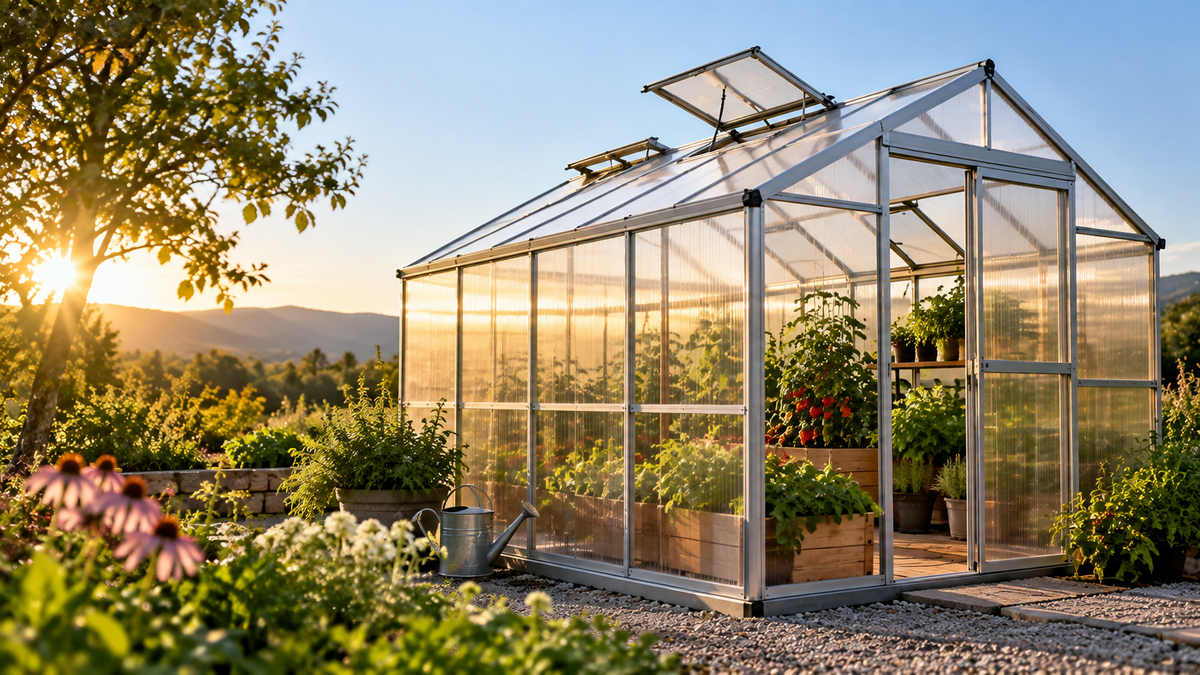
Twin-wall polycarbonate panels, for example, trap heat more effectively than single-layer glazing because the air channel between the two layers adds insulation, using the same principle as a double-pane window. From there, a 10mm twin-wall panel insulates better than a 6mm twin-wall panel, which matters if cold-climate growing or year-round use is the goal. Glass transmits slightly more light but loses heat faster and is significantly heavier and more fragile. Decisions about panel construction are really choices about how the greenhouse handles heat, which is why they're worth figuring out before you pick a model. For a side-by-side look at how different Grandio® models handle this, our useful Greenhouse Comparison is worth a read.

How Sunlight Creates A Warmer Growing Environment
Sunlight is the primary heat source for any non-heated greenhouse, and how much you get varies by season, weather, greenhouse orientation, shading from nearby structures or trees, and the number of clear days in your region. Greenhouses facing south or southeast in the Northern Hemisphere capture more winter sun, which helps extend the cold-weather growing season. Meanwhile, shading from buildings or trees cuts both light and heat, which is usually a problem in winter and sometimes a relief in summer.
The covering transmits light differently depending on the material. Polycarbonate diffuses light rather than passing it straight through, scattering it more evenly across plant surfaces and reducing the risk of leaf scorch. That diffusion is an advantage for most crops and is one reason polycarbonate has largely replaced glass in hobby greenhouse applications.
Ventilation: Managing The Heat A Greenhouse Generates
Retaining heat is useful, but a greenhouse also needs a way to release it. On sunny days, interior temperatures can climb fast, so a closed greenhouse can go from comfortable to damaging in a matter of hours without any active management. Adjustable roof vents take advantage of the same convection principle that the greenhouse runs on: warm air rises and exits through the top, while cooler air enters through lower openings, driving a natural exchange without electricity.
Sliding doors supplement that airflow on the hottest days and give you the flexibility to increase ventilation quickly when temperatures spike. Together, roof vents and sliding doors handle most of the temperature management a greenhouse needs across the growing season, with supplemental fans or shade cloth filling the gaps when passive ventilation isn't enough. Good structure planning accounts for this from the start. If you're still working out how to lay everything out, our DIY Greenhouse article covers what to think through during planning.
How Greenhouse Materials Support Plant Growth
The frame and panels influence durability, insulation, light transmission, and the overall growing environment together rather than independently. An aluminum frame keeps the structure square and resists rust in the humid environment a working greenhouse creates, while polycarbonate panels with a UV-protective coating protect both the panels from yellowing and the plants from excessive UV radiation over time.
Getting these material choices right from the start matters more than most buyers expect. A greenhouse that's losing heat through thin panels, bowing from weak framing, or allowing UV degradation to cloud the glazing within a few years is harder to work in and less productive than one built with quality materials from the beginning. For help thinking through layout, structure type, and site preparation before you build, our Greenhouse Plans guide covers the groundwork.

Final Thoughts
A greenhouse works by using sunlight, heat retention, insulation, and ventilation together to create a more controlled growing environment than an open garden bed can provide. Understanding those mechanics, including how heat enters, stays, and gets managed, gives you the tools to make better decisions about materials, size, placement, and ventilation before you build or buy. The right combination of those factors is what turns a greenhouse from a structure into a genuinely productive growing space.
Frequently Asked Questions About How A Greenhouse Works
Do greenhouses work during winter?
Yes. A greenhouse provides a protected environment during winter, but interior temperatures still depend on sunlight, insulation, outdoor temperatures, and supplemental heating. In colder climates, additional heating is often necessary for temperature-sensitive plants.
Can a greenhouse get too hot for plants?
Yes. Temperatures inside can rise quickly on sunny days. Adequate ventilation, shading, and active monitoring prevent excessive heat from stressing plants.
Does a greenhouse need electricity to work?
No. A basic greenhouse typically functions using sunlight as its primary heat source. However, electricity is useful for supplemental heaters, fans, lighting, or automatic ventilation.
Does a greenhouse stay warm at night?
A greenhouse gradually loses stored heat after sunset. Insulation quality, thermal mass, outdoor temperatures, and any supplemental heating all influence how quickly nighttime temperatures fall.
What plants grow well in a greenhouse?
Greenhouses support vegetables, herbs, flowers, seedlings, and many specialty crops. Suitable plants depend on the temperatures and humidity maintained indoors, as well as the available growing space.
How humid should a greenhouse be?
Ideal humidity varies by plant species and growth stage. Excessively high humidity encourages certain diseases, while conditions that are too dry affect plant health. Ventilation and watering practices manage humidity levels most effectively.
Where should a greenhouse be placed?
A greenhouse generally benefits from a level, well-drained location with good sun exposure. Consider nearby trees and buildings, prevailing winds, accessibility, drainage, and water access before choosing a site.

