
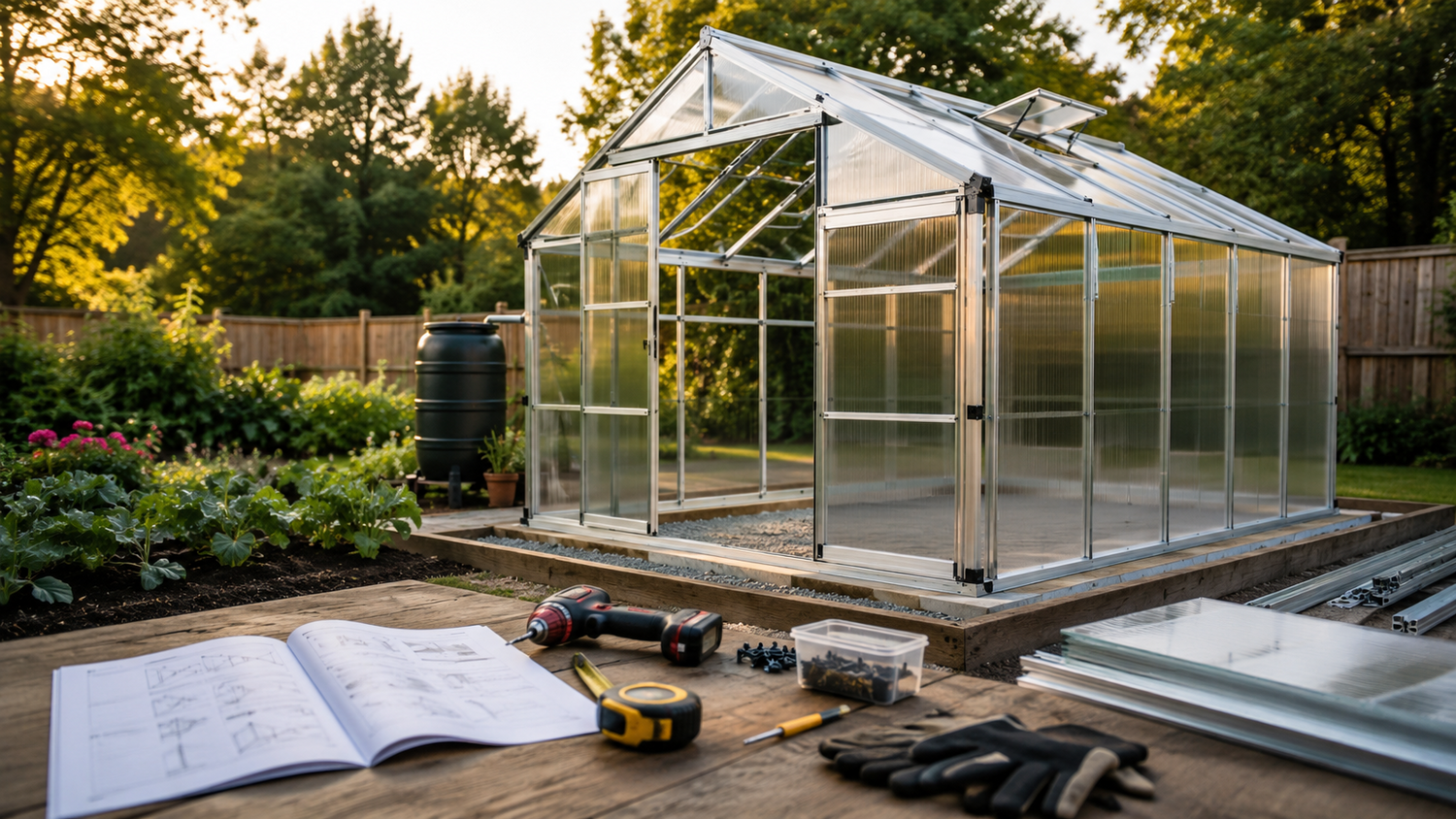

Key Takeaways:
- Planning: Selecting the right location, foundation, and design creates a greenhouse that supports long-term gardening success.
- Building Options: Comparing a greenhouse kit vs. building from scratch helps you choose the approach that fits your budget, skills, and timeline.
- Long-Term Performance: Quality materials, proper ventilation, and a stable foundation contribute to a durable greenhouse that supports healthy plant growth.
Learning how to build a greenhouse comes down to a handful of decisions that all affect each other: where you put it, what you set it on, what it's framed and glazed with, and how you'll move air through it once plants are inside. Get those right, and the structure holds up through wind, rain, and snow for years. Get them wrong, and you'll be troubleshooting sagging panels or a shifting frame by the second season.
At Grandio® Greenhouses, we design premium aluminum greenhouses with durable polycarbonate panels, practical features, and quality craftsmanship to help gardeners create productive and reliable growing spaces.
This guide walks through the process in order, from picking a spot to finishing the interior, and covers where a scratch build and a kit start to look different.
Start With Purpose, Then Work Backward Into Size
Before anything else, figure out what you actually want to grow. Seed starting for a spring vegetable garden takes much less space than year-round tomato and pepper production, and tropical or exotic plants that need to overwinter will require more headroom and better insulation than a simple cold frame replacement.
Choosing The Right Site
Once you know your purpose, look at your site. You want at least six hours of direct sun a day, decent drainage, and some protection from prevailing wind if your yard is exposed. It's also worth checking local zoning and HOA rules before committing to a size, since permanent structures over a certain footprint often need a permit.
Sizing Your Greenhouse: Why Bigger Is Usually Better
From there, size decisions tend to go in one direction. Long story short, gardeners almost always wish they'd gone bigger. A smaller footprint, like the Grandio® Element 6x8, works well for seed starting, a few raised beds, or a first greenhouse where you're still figuring out how much space you'll use. If you already know you want room for multiple beds, shelving on both sides, and a comfortable place to work, it's usually smarter to size up from the start rather than outgrow your first structure in a year.

The Foundation: Where A Greenhouse Building Guide Starts
Every serious greenhouse building guide puts the foundation first for a reason. After all, it's the one part of the structure you don't get to redo later. A greenhouse is only as square, level, and stable as what it's sitting on, and a base off by even an inch can throw off panel alignment for the entire build.
Comparing Foundation Options: Concrete, Gravel, And Wood
Concrete slabs and compacted gravel beds are the two most common DIY foundations. Concrete gives you a permanent, dead-level surface and works well if you're anchoring with bolts. In contrast, gravel is cheaper and drains well, but it takes more care to get it level and keep it that way. Wood decks are another option, particularly over an existing structure, though you'll need anchoring hardware rated for wood.
Why Anchoring Isn't Optional
Whatever surface you choose, don't skip dedicated anchoring. Wind is the single biggest threat to an improperly secured greenhouse. To be specific, a structure that isn't fastened down can shift or lift in a strong gust, which is exactly what a wind rating assumes won't happen. Purpose-built base kits exist to solve this: they create a stable perimeter frame that keeps the structure square during assembly and give you a proper anchor point for wood, concrete, or dirt installations, rather than leaving you to improvise on-site.
Framing And Glazing: Materials That Hold Up
Once your foundation is set, the frame goes up first, then the panels. Aluminum is the most common frame material in DIY kits because it's lightweight, rust-resistant, and usually powder-coated for extra corrosion resistance. However, more than anything else, wall thickness matters more than most buyers realize. A thicker profile handles wind and snow load significantly better than a thin one, even if the overall design looks similar on paper.
Why Polycarbonate Is The Standard
For glazing, twin-wall polycarbonate has become the standard over glass or single-layer plastic film. The air gap between the two panel layers acts as insulation, which matters both for keeping heat in on cold nights and keeping the interior from swinging too hot during the day. Thicker panels generally mean better insulation and heat retention, which is worth factoring in if you're in a colder climate or plan to grow through winter.
Assembling The Frame: Slow And Square Wins
As you assemble, work through the frame methodically. Check that each section is square and level before moving to the next, and don't fully tighten hardware until you've confirmed alignment. Panels seated even slightly out of square tend to create gaps that allow air and moisture to enter over time. It's a slower way to build, but it's the difference between a structure that stays tight for a decade and one that needs adjustment every season.

Ventilation, Layout, And The Details That Make It Usable
An airtight greenhouse isn't doing you any favors. After all, enclosed spaces trap heat and humidity quickly, especially in summer, which is exactly what fungal disease needs to take hold. Roof vents, side vents, or an exhaust fan are non-negotiable, not optional add-ons. If you don't want to open and close vents manually as temperatures shift, automatic vent openers are worth it. They use a temperature-sensitive piston rather than electricity, so they still work if you lose power.
Beyond airflow, think through the interior layout before filling it with plants. Shelving, staging tables, and clear walkways make daily watering, pruning, and harvesting faster, and grouping plants by light or water needs cuts down on guesswork. If you're planning drip irrigation or misting down the line, it's easier to route before benches and pathways are finalized than to retrofit around them later.
Greenhouse Kit vs. Building: Which Approach Fits You
The greenhouse kit vs. building from scratch decision really comes down to how much time you have, how much design flexibility you want, and how comfortable you are sourcing and cutting your own materials.
Building From Scratch: Full Control, More Responsibility
Building from scratch gives you full control over custom dimensions, any frame-and-glazing combination you want, and the ability to match a specific spot on your property exactly. The trade-off is that you're responsible for ensuring every component is compatible and rated for your local wind and snow loads, which requires careful planning and often some trial and error.
Choosing A Kit: Less Strategizing, More Growing
Greenhouse kits let you skip a lot of the strategizing because the frame, panels, hardware, and often the base and anchoring system are already engineered to work together. This saves you a ton of time that you might have spent trying to assemble separate purchases. That's valuable for a first greenhouse, since it cuts out a lot of the sourcing and compatibility research a scratch build requires.
Gardeners who want a larger, more established growing space without a custom build often land on something like the Grandio® Elite 8x12, which packages the frame, panels, and anchoring into a single kit rather than separate decisions. But ultimately, neither route is objectively better. A scratch build rewards patience and hands-on planning, whereas a kit rewards speed and consistency, since the engineering work is already done before it ships.

Final Thoughts
A greenhouse that lasts comes down to the fundamentals: a stable, level foundation, a frame-and-glazing combination suited to your climate, ventilation that gets used, and an interior laid out for how you'll garden day to day. No matter if you build from raw materials or start from a kit, those fundamentals decide whether the structure holds up through its first tough winter or needs rework by spring. Take the planning stage seriously, and the rest tends to go a lot smoother.
Frequently Asked Questions About How To Build A Greenhouse
What is the easiest type of greenhouse to build?
A freestanding structure with an aluminum frame and polycarbonate panels tends to be the most approachable option. Aluminum doesn't need the ongoing maintenance wood frames do, and polycarbonate panels are more forgiving to handle and install than glass.
Do I need a permit to build a greenhouse?
It depends on your city and the size of the structure. Small, low-profile greenhouses often don't require one, but larger permanent installations frequently do. Check with your local building department before finalizing plans.
How long does it take to build a greenhouse?
A fully custom build from raw materials can take anywhere from several days to a few weeks, depending on the size and complexity. Most kit-based builds are designed to be completed over a weekend, though larger multi-section models can take several days with two people working together.
What tools are commonly needed to build a greenhouse?
A tape measure, level, drill, wrench set, rubber mallet, and screwdriver cover most of what's needed. Kits usually specify exactly what's required in the assembly manual, so you can gather everything before you start.
How much ventilation does a greenhouse actually need?
A greenhouse needs enough roof and side vents, or an exhaust fan, to keep air moving and prevent heat and humidity from building up. The air inside should be able to fully exchange several times per hour during warm weather to keep conditions pleasant for most plants.
Is a greenhouse useful during the summer?
Yes. During warmer months, a greenhouse can support heat-loving plants, protect crops from heavy rain, and provide a controlled environment when combined with adequate ventilation and shading.
Can I build a greenhouse directly on soil?
You can, but soil tends to settle unevenly over time, which can throw off the frame's alignment. A compacted gravel bed, concrete pad, or dedicated base kit gives a more stable, longer-lasting foundation than bare dirt alone.

